
405/630/635/675nm Butterfly Laser Diodes
Butterfly-packaged laser diodes at 405nm, 630nm, 635nm, and 675nm provide a compact and stable light source for biomedical instrumentation, fluorescence detection, DNA analysis, and optical imaging.
With an integrated TEC temperature controller and photodiode (PD), these laser diodes are designed for applications that require controlled operating temperature and stable optical output.
Key Features
Integrated TEC Temperature Control
The built-in thermoelectric cooler (TEC) enables closed-loop temperature control of the laser diode, helping maintain stable operating conditions.Integrated Photodiode Monitoring
An internal photodiode continuously monitors the optical output and can provide feedback to the host system for optical power monitoring and control.300mW Precision Output
The laser is designed for a rated optical output of up to 300mW, with output power calibrated during production for consistent performance.Stable Long-Term Operation
TEC control and optical power monitoring help minimize output fluctuations associated with temperature changes, current drift, and device heating during continuous operation.Fiber-Coupled Output
The butterfly laser can be configured with SMA905 multimode fiber output, making it convenient to integrate into optical systems and instruments.
Typical Applications
Photodynamic Therapy
Red laser wavelengths around 630–675nm are widely relevant to photodynamic therapy because red light generally provides deeper tissue penetration than shorter visible wavelengths, while the exact treatment wavelength depends on the photosensitizer being used.
The combination of TEC temperature control and photodiode feedback can help maintain consistent optical output, which is important for systems requiring controlled light delivery.
Biomedical and Fluorescence Detection
405nm laser diodes are commonly used as excitation sources for fluorescence-based instruments, while red wavelengths such as 630–675nm can be selected for specific fluorescent dyes and optical detection schemes.
These laser diodes can be integrated into systems such as fluorescence analyzers, biochip instruments, and other biomedical optical equipment. Laser sources used in life-science instrumentation commonly emphasize stable and reliable optical output.
DNA Sequencing
405nm and red visible laser sources can be used as excitation sources in fluorescence-based DNA analysis and sequencing systems. Different excitation wavelengths can be matched with different fluorescent labels to enable multi-color detection.
The TEC-controlled butterfly package and integrated PD provide a practical solution for systems requiring stable optical output during extended operation.
Optical Microscopy and Imaging
The SMA905 multimode fiber output allows the laser source to be conveniently coupled into microscopy and imaging systems.
Fiber delivery can simplify optical alignment and provide flexible routing between the laser source and the optical system, making the butterfly laser suitable for compact laboratory and OEM instruments.
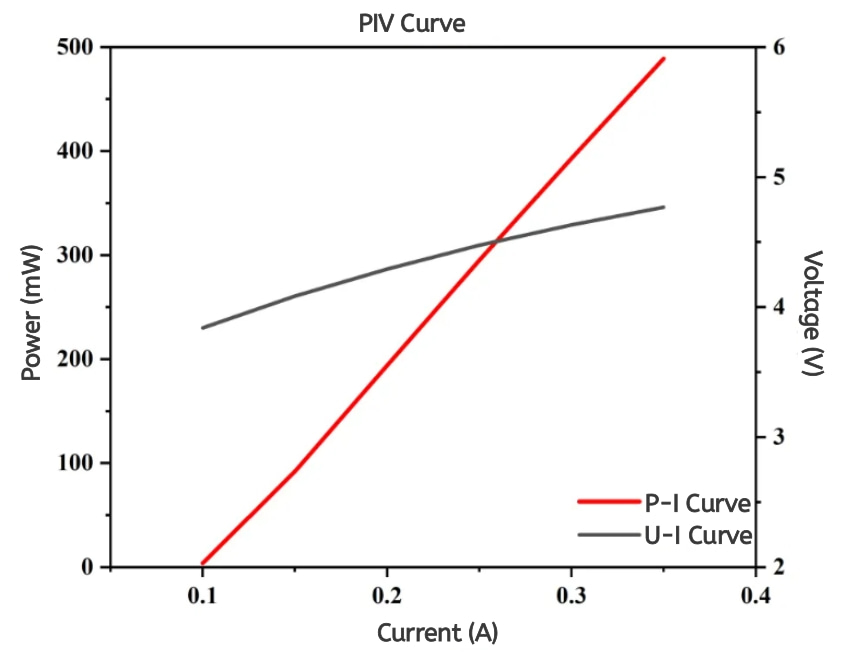
P-I-V Characteristics
The P-I-V (Power-Current-Voltage) characteristics of the laser diode are provided below.
Conclusion
The 405nm, 630nm, 635nm, and 675nm butterfly laser diode series combines TEC temperature control, integrated PD monitoring, precision optical output, and fiber-coupled delivery in a compact package.
These features make the lasers suitable for integration into biomedical instruments, fluorescence detection systems, DNA analysis equipment, optical microscopy, imaging systems, and photodynamic therapy equipment.
For detailed specifications, package configurations, and available wavelengths, please visit our Butterfly Laser Diode product page.


Sign up for our newsletter
Sign up for our newsletter*
