
795nm Narrow-Linewidth DFB Lasers for Frequency Stabilization – Part 2
As quantum precision measurement technologies continue to advance, applications such as cold atom interferometry and saturated absorption spectroscopy play an important role in atomic clocks, atomic gyroscopes, atomic magnetometers, and atomic gravimeters. These technologies rely on precise atomic manipulation, state preparation, and detection to support advanced sensing systems and fundamental physics research.
The 795nm laser, corresponding to the D1 transition of rubidium atoms, is an important light source for atomic cooling, frequency stabilization, and atomic state control. Its linewidth, output power, wavelength stability, and environmental adaptability can directly affect the measurement accuracy and operational stability of the overall system.
In this second part, we continue to explore the key performance characteristics, packaging options, and reliability of 795nm narrow-linewidth DFB lasers.
2. Key Performance Characteristics and Measurement Verification
The 795nm DFB laser demonstrates stable and predictable LIV characteristics, with a smooth output power response to drive current and no noticeable kinks. Its favorable threshold characteristics help maintain consistent optical output during long-term operation, making it suitable for precision frequency stabilization systems.
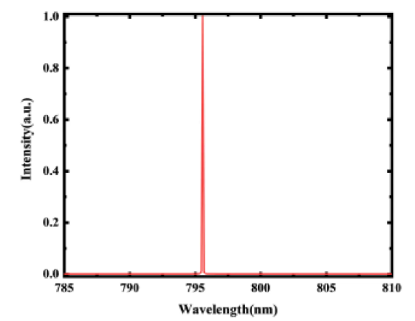
The laser features a clean, single-mode spectrum with a center wavelength of 795 ± 1nm and a side-mode suppression ratio (SMSR) of ≥35dB. Its spectral purity helps reduce unwanted frequency components and supports stable frequency locking in applications requiring narrow spectral output.
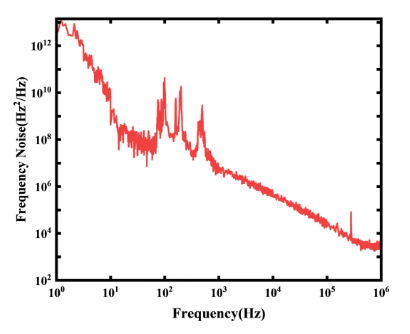
Low frequency noise and good frequency stability are also important characteristics. The narrow spectral linewidth and noise performance support stable locking to saturated absorption features, helping improve the long-term measurement stability of atomic clocks and quantum sensing systems.
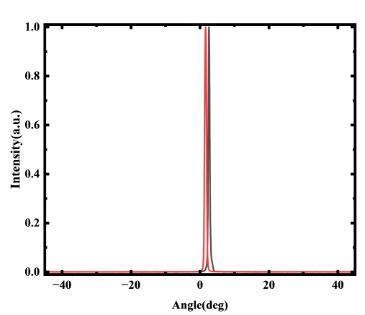
In addition, the device offers good beam quality and controlled divergence, facilitating optical coupling and integration into free-space optical setups, multi-channel beam splitting systems, and optical cavities.
3. Multiple Package Options and Wide Operating Temperature Range
To meet different requirements for compact integration, modular system design, outdoor operation, and volume production, the 795nm DFB laser is available in four package configurations: COS, TO, BOX, and butterfly.
COS and TO packages feature compact dimensions, making them suitable for portable quantum sensing equipment and miniaturized atomic magnetometers. BOX and butterfly packages offer additional protection and thermal management capabilities, supporting laboratory instruments, industrial quantum systems, and applications requiring long-term stable operation.
The device supports an operating temperature range of 10°C to 70°C. Through optimized chip thermal management and coordinated temperature control, the laser is designed to maintain stable optical and spectral performance under varying environmental conditions.
This helps address stability requirements in industrial environments, outdoor applications with temperature fluctuations, and laboratory systems operating continuously for extended periods.
4. Reliability and Quality Assurance
With established chip manufacturing processes and aging screening procedures, the devices are designed for a service life of ≥10,000 hours.
Batch products undergo multiple reliability tests, including high- and low-temperature cycling, long-term powered aging, and mechanical vibration testing. The product has also undergone testing and evaluation by the National Institute of Metrology, China, supporting performance consistency and reliability in batch applications.
For more information, please visit our laser product page or contact us directly.


Sign up for our newsletter
Sign up for our newsletter*
